

WHS America 250 Celebrations
Celebrating 250 years of American history and 50 years of the Worcester Historical Society
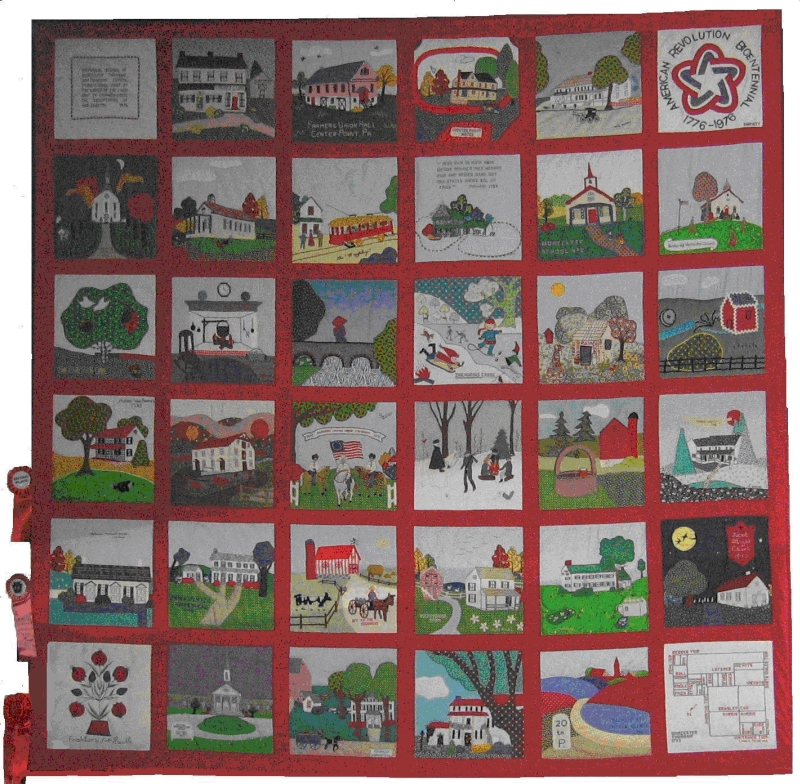
The Bicentennial Quilt
The Worcester Historical Society’s Bicentennial Quilt is a community-created work of art celebrating Worcester Township’s rich history. Explore the quilt, download activities, and learn about this treasured artifact.
 Loading…

 Reload document
  Open in new tab
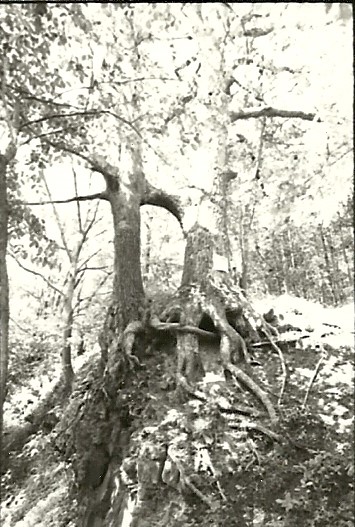
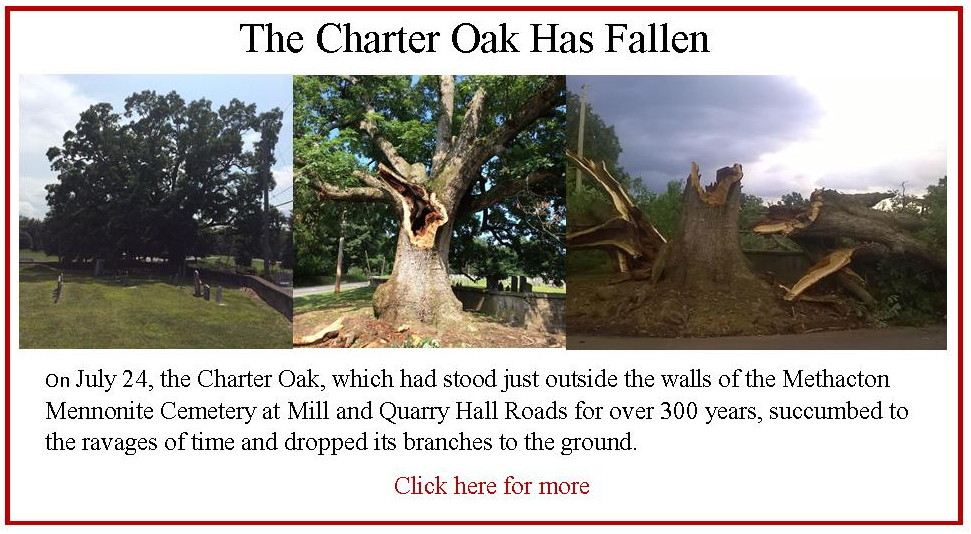
 Worcester’s Heritage Trees
Worcester Township is home to remarkable trees that have stood for 250 years or more — living witnesses to our nation’s entire history. This collection features photographs and documentation of these extraordinary heritage trees.
George Washington & Worcester — October 1777
Excerpts from the Montgomery Transcripts regarding General George Washington and his travels through our area, as well as the historical celebrations that took place to commemorate them. These are copied exactly from the transcripts, (there are some misspellings and typos). These words are found on pages 399 to 408.
On our website, we have more transposed copies of the Montgomery Transcripts. Find them under the Local History Tab in either Landes Legacy or Lester Landes Special Topics.
July 28, 1927. Where did Joseph Smith live in Revolutionary Days
… On October 4, 1777, Washington paid Peter Wentz for “butter and vegetables.” On October 5 he paid for the “house and trouble caused” at Perkiomen. No mention is made as to who received the money. On October 16 he paid Frederick Wambole “for the use of his home and the trouble caused.” On October 19, he paid Peter Wentz for food and “trouble caused.” The Wentz and Wambole houses are known. …
July 28, 1927. Battle of Germantown October 4 1777
150 Anniversary Celebration, October 1st – at Germantown, Worcester, Skippack, Schwenksville, Towamencin.
Preparations are already under way for the observance of the 150th anniversary of the Battle of Germantown, which occurred October 4, 1777. This historic celebration will be held under the auspices of the Germantown Historical Society and Montgomery county historical organizations are already at work.
Governor Fisher has promised to be present if it is at all possible, he said in a letter to an invitation extended to him by Senator Woodward, of Germantown.The celebration will start at 9 a.m., Saturday, October 1st in Germantown. The route of Washington’s army will be followed and stops will be made at historical spots. The famous Chew mansion and other historic houses will be thrown open for inspection.
It is expected that several hundred patrons will accompany the party in large busses and smaller motor cars.
Then the party will follow the course of the army over Germantown Avenue, Bethlehem pike and Skippack pike to the village of Skippack. There a stop will be made for lunch, after which a meeting will be held in Trinity Reformed Church. Dr. Thomas Lynch Montgomery Librarian of the Historical Society of Pennsylvania and former state librarian, will deliver an address.
I.P. Knipe, Esq., president of the Montgomery County Historical Society, will preside at Skippack. He will introduce the presiding officer. Hon. Samual Elem, president of the Germantown Society.
After the meeting at Skippack the party will visit Washington’s headquarters (Pennypacker Mills) Schwenksville, which was the home of former Governor S.W. Pennypacker, and his family, of Germantown. Mr. Pennypacker will welcome the tourists at the house.
Other sites to be visited on the tour are the burial of General Francis Nash, at the Towamencin Mennonite meetinghouse, and the Isaac K. Schultz house, in Worcester which was Washington’s headquarters immediately preceding the battle, and again later in October.
The public is invited to join this tour and participate in all the day’s events. We shall all learn something by attending the celebration. The public schools of the community are urged to become interested and attend.
September 15, 1927.
Historical Societies Tour Battlefield of Germantown
Historical Society of Montgomery County and Germantown Historical Society to visit Sacred Historical Spots
The annual outing of the Historical Society of the Montgomery county will be held on Saturday, October 1, when this society will join with Germantown Historical Society on a combined tour over the Germantown battlefield and the route of the American Army before and after the battle.
PROGRAM FOR THE DAY
Members of the Montgomery Country Society will meet at Historical Hall, 18 east Penn street, Norristown, at 8 a.m., and proceed to Germantown visiting Grumblethorpe, 5621 Germantown Avenue.
Boys scouts will be stationed at points of interest along the route; first at the Morris House, 5443 opposite Church Lane. Washington lived here in 1793 and 1794, when the Federal Government was here on account of yellow fever in Philadelphia, then at Market Square, from Church Lane to School Lane. The British main line at the time of the battle extended at right angles here from Stenton Avenue on the east to the Schuylkill river on the west, then Vernon Park5700, the monument in the center commemorates the Battle of Germantown, then High Street, 6000, the farthest point south attained by the American troops (these were General Wayne’s troops), then the former Green Tree Tavern, 6019 built in 1748, then 20 minutes at Wych, 6100, SOUTH OF Walnut Lane. The rear part is said to be the oldest house in Germantown, having been built before 1770.
The British had a field hospital here and General Lafayette greeted the people here at the time of his visit, in 1825. A recital on the carillon of the First United Methodist Episcopal Church will be given by Professor Bernard R. Mausert at this point also. Then the Mennonite church, north of Walnut Lane, 6100, built 1770. In front of the church General Agnew was shot. From Walnut Lane, 6300, occurred the severest fighting of the battle. Then 20 minutes at the Johnson House, Washington Lane, 6300 built in 1738.
The house bears the mark of battle which waged about it. It is now the home of the Women’s Club. Then 20 minutes at Cleveden, the Chew House north of Johnson street, 6400, built in 1760. A small force of the British occupied this house in the battle and held it, notwithstanding the desperate assaults of the Americans, in which many men were lost. Then Billmyer house, North of Upsel street, 6500, built in 1727. Standing upon a stone in front of this house, Washington directed the attack upon the Chew house.
General Francis Nash was mortally wounded near here. Then St. Michael’s Lutheran Church, south of Phil-Ellena street, 6700, here were buried Major Witherspoon, killed in the battle, and Christopher Ludwick, “baker general” of the American army. Mount Pleasant avenue, 7100, the position of the most advanced regiment of the British army. It was driven in by the advancing Americans. Then Lutheran Theological Seminary, opposite Allen Lane, 7300. Here the battle opened at dawn, when the American attacked the British pickets stationed here, then turn to the right on to Bethlehem pike at Chestnut Hill.
St. Thomas Espiscopal Church, Whitemarsh. When the American retreated the British pursuit continued to this point. St. John’s Lutheran church, Center Square, the first church building was used as a hospital by the Americans after the battle and some of the dead are buried here. Twenty first milestone, designated by a flag. The American army was encamped hereabouts for two days proceeding the battle and set to march to Germantown after nightfall on October 1, 1777, right south of Skippack creek, designated by a flag.
MEETING AT SKIPPACK
One hour will be allowed for luncheon at Skippack, after a public meeting will be held in the Trinity Reformed Church, where Thomas Lynch Montgomery, librarian of the Historical Society of Pennsylvania, will make the address. The meeting will be presided over by the president of the Germantown Historical Society after an opening address by the president of Montgomery County society. Leave Skippack on State highway No. 73 to Schwenksville as far as Pennypacker Mills, the American camp here abouts September 26 to 29 and October 4 to 8, 1777.
To this point the American retreated after the battle bringing all their wounded with them. Many soldiers died here and are buried in unmarked graves. Thirty minutes will be spent at the Pennypacker’s home with a five minute address by Bevan A. Pennypacker, then south on the state highway No. 73, though Skippack, and left on the Forty -foot road past the house on the former Benjamin Markley farm, where General Nash died, designated by a flag, to Towamencin Mennonite Church, where General Nash and other officers are buried, then south on Sumneytown pike to Gwynedd Square, on the road to Center Point, to the house of Isaa K. Schultz. Peter Wentz lived here at the time fo the Revolution. General Washington’s headquarters was in the house of October 2 and 3, and again October 16 to 21, when the army was encamped for the second time in the neighborhood. B. Whitman Dambly will give a five minute address here, the end of the tour.
September 29, 1927. Saturday Historical Tour
The 150th anniversary celebration of the battle of Germantown (October 4, 1777), will start here. It will continue in Germantown for several days.
The tour into Montgomery county, including Skippack, will be under the auspices of the Germantown and Montgomery County Historical Societies.
The route covered by Washington’s army will be followed on the tour. It will start at Queen Lane and Germantown Avenue 9 a.m., in half dozen large busses and many private cars. The most historic places in Germantown will be visited.
The Skippack pike from Fort Side Inn will be followed. Along the route are historic St. John’s church, Center Square, the 21st milestone in Worcester (historic location), site of Skippack camp between Skippack and Cedars.
The party is scheduled to arrive at Skippack at 12 noon. Lunch at Fireman’s hall and Valley House hotel.
At 1 o’clock, public meeting at tTrinity Reformed church, Skippack.
The principal speaker will be Dr. Thomas Lynch Montgomery. He will speak on “Before and After the Battle.”
At 2 o’clock tour continues to Pennypacker’s mills, where the Pennypacker mansion will be thrown open. A five minute address will be delivered by Bevan A. Pennypacker, Esq., son of the late Governor.
At 2.50 leave Pennypacker house down Skippack Road, at Skippack turn left on Forty Foot road, passing the former Markley farm where General Nash died, from here to Towmencin Mennonite meetinghouse. Here a monument will be dedicated and unveiled in memory of General Nash. A five foot granite monument was placed there on Tuesday bearing a bronze plate. This dedication is fixed for 3.30 o’clock. H.S. Allen, of Philadelphia, former president of North Carolina Society of Pennsylvania, is down for a five minute address. However, if the Governor of North Carolina and other officials of the state are present (and they are expected to be) the Governor will deliver the address.
At 3.50 the tourists leave Towamencin meetinghouse, going south on Sumneytown pike to Gwynedd Square. Here, turn right onto the road to Center Point, arriving at the Isaac K. Schultz (Washington headquarters) house where a brief address will be delivered by B.W. Dambly. From here the tourists leave for home. The tour will be made regardless of the weather.
Traffic on the Skippack State highway at Sumneytown pike and Forty-Foot road will be regulated by one or more State highway patrol men.
The Boy Scouts will have a prominent part in the tour. A number of Germantown troops will be here. These and the Skippack troop will form a line between Skippack road and Trinity Reformed church, Skippack, as the visitors pass to the church. The combined troops will then march to Hallman’s Grove, where the scouts will have a celebration on their own.
There will be a generous display of flags along the entire route from Fort Side Inn to Schwenksville, along Forty foot road, through Kulpsville, at Gwynedd Square and along the Center Point road to the Schultz house. This is a public celebration and everybody is welcome to accompany the procession.
September 29, 1927. Washington Army at Skippack
B.W. Dambly Discovered Important facts Concerning Washington And His Army From Germantown Independent Gazette.
Be carefully have all phases of the life of George Washington been studied that his movements of almost every day during his public career can be accurately traced.
Yet now, after the lapse of 150 years, it has been possible to discover a Washington’s headquarters of the time of the American Revolution which hitherto has been mentioned in no historical account and the very recollection of which was forgotten in the immediate neighborhood. The account here given is the first mention of it in print anywhere.
The discovery was made incidental to the preparation of the itinery for the historical tour Saturday 1, which is to open the 150 anniversary of the battle of Germantown.
The successive camps of the American army after the battle of Brandywine, September 11, 1777. Were at the Falls of Schuylkill, at Pottsgrove, along the Perkiomen near Schwenksville, then Skippack, and at Worcester, following which came the battle of Germantown, on October 4.
Washington’s headquarters at the time of these different camps have long been known with a reasonable degree of certainty, excepting only in the case of the Skippack camp. No account ever printed tells where Washington lived on September 30, October 1 and 2, while the army was encamped on the banks of Skippack Creek, in the present Montgomery County.
The best informed man on the history of the Skippack region is B. Witman Dambly, Justice of the peace at Skippack. His aid was invoked when preparations for the tour were made.
One of the first request made of Mr. Dambly was to point out the place where the army encamped and the place where the commander made his tempory home.
Mr. Dambly said almost no tradition about the camp existed in the locality. The ford where the army crossed Skippack creek was known. It is a short distance south of the place where Skippack pike now crosses the stream.
But nothing was known as to the campsite or any houses occupied by officers.
There are numerous letters and orders extant dated at Skippack at the time of the camp, but none shed any light upon the question that had been raised.
It was suggested that perhaps Washington did not make his headquarters in any houses but occupied a tent during his stay at Skippack.
On reflection that was hardly plausible, for the army carried little baggage on the rapid movements following the battle of Brandywine, and at each of the stops Washington took up his abode with one of the leading families of the region.
FIRST CLEW FOUND IN WASHINGTON’S FINANCIAL ACCOUNTS
Then one day last summer an examination was made of Washington’s financial accounts as noticed by John C. Fitzpatrick, assistant chief of the manuscript division of the Library of Congress.
Here was revealed much data which apparently few if any historians had ever consulted. Payments made to the owners of the different houses occupied were entered and other expenditures.
Coming down to October 2, 1777, this entry was found.
Paid Joseph Smith 2 pounds, 5 shillings for the use of his house and trouble caused. Paid Joseph Smith 11 pounds, 19 shillings, 6 pence for sundries.
October 2 was the day when the army left Skippack to move several miles farther down, into Worcester township. Evidently this payment was made upon departure of Washington from the house which he had been occupying during the Skippack camp.
Immediately word went up to Mr. Dambly to locate Joseph Smith.
He responded that nothing was know of any Smith family in early days there abouts. Smiths were numerous everywhere except at Skippack.
However, he inserts a communication in the Montgomery Transcript, the weekly news paper published in Skippack, asking information about Joseph Smith.
This produced results.
EARLY SURVEYOR‘S DRAFT ESTABLISHES SITE
A letter came to Germantown from Robert B. Souder, of Souderton, saying he thought he had the desired information.
A visit to Mr. Souder followed. He was a young man, not the ancient type that is commonly depicted as reveling in the lore of by gone days.
Mr. Souder produced a beautiful executed pen-and-ink draft of the farm which Joseph Smith owned prior to the Revolution.
It comprised 127 acres, bordering the east side of Skippack road, south of Skippack Creek.
The draft was made by David Schultz, a famous surveyor of the eighteenth century whose home was in Upper Perkiomen valley near the present borough of East Greenville.
David Schultz surveyed the Smith farm in 1755. That was no doubt the time of the purchase of the property by Smith. It was located as being in Bebber Township, the early name of Skippack township.
Another draft in the possession of Mr. Souder indicated conveyances of part of the property by Joseph Smith’s son, Jacob, in 1786, suggested that the father was now dead and the son had inherited the property.
Mr. Souder explained that these drafts were found in an old desk which had long been in the possession of his father, the late Jacob Souder. The father lived for many years on a thirty five acre farm at Skippack that was part of the original Smith tract.
Germantown Genealogist Supplies Facts About Smith Family
Then by a curious coincidence a great amount of valuable information about the family of Joseph Smith came to light here in Germantown.
One day just about this time the first inquiries were in progress a visitor at the museum of the Germantown Historical Society inquired whether the society had any information about Captain Smith who was killed or wounded in the battle of Germantown.
In the course of the conversation the visitor remarked that the father of Captain Smith was supposed to be a Joseph Smith who lived up in the Pennsylvania German country.
It soon transpired that the visitor, who was Miss Marion M. MacGrath, of Maplewood avenue, a genealogist, had traced back the lineage of certain Philadelphia families to the very Joseph Smith, of Skippack, who was Washington’s host 150 years ago.
The assessor’s list of Skippack township for 1766 contained the name of Joseph Smith, tailor.
His will is recorded at the register of Wills office, Philadelphia, having been proved May 5, 1783. That was the year before Montgomery County was created.
Miss MacGrath had located the grave of Joseph Smith, in the Lower Mennonite burial ground at Skippack. The stone showed that he died August 8, 1782, aged 76 years, 9 months, 8 days.
The children of Joseph Smith were Jacob, Henry, Joseph, Katherine and John.
John Smith was captain of a militia company in the Skippack region. That fact gives us an intimation as to why General Washington made the Smith house his headquarters.
Miss MacGrath also found that a Joseph Smith served in Colonel John Eyre’s regiment of artillery, in the Pennsylvania militia, and he was wounded and taken prisoner at the battle of Germantown. This may have been th son of the elder Joseph Smith.
Thus the trail has been run out about as completely as is possible after an interval of a century and a half.
Mr. Dambly is engaged in writing a paper will fully cover the subject and which will be read at a meeting of the Historical Society of Montgomery County some time the coming winter.
October 6, 1927. Two Historic Address.
Delivered in Honor of General Washington and General Nash on the Historical Tour, October 1, 1927.
These address, both full of valuable historic facts, were delivered on Saturday October 1, in connection with the Historical tour in commemoration of the battle of Germantown. The first at the dedication of a monument in memory of General Nash, which was erected near the Towamencin Mennonite meetinghouse, by J.S. Allen, of Philadelphia, former president of the North Carolina Society of Pennsylvania, and the second by B. Whitman Dambly at the home of Isaac K. Schultz (Washington’s headquarters in Worcester Township.)
J.S. ALLEN’S ADDRESS
Let us cast a backward glance at the North Carolinas, who were in Washington’s northern campaign, and learn something of their military history at and previous to the battle of Germantown. The North Carolina Continental regulars, as distinguished from State troops and militia were regimented at or near Wilmington early in 1776. Before tht time, North Carolina troops aided in driving Lord Dunmore’s forces out of Virginia, and, with a loss of only one man of their own, had crushing defeat a vastly superior force of Tory Highlanders and former regulars at Moore’s creek bridge, February 27, 1776.
James Moore, of New Hanover county and Robert Howe, of Brunswick County, were commissioned Brigadier General in Continental line of March 1, 1776. Moore afterwards marched his brigade to the vicinity of Charleston, South Carolina, and there fought under Major General Charles Lee. When Lee was ordered northward, Moore was for a while commander of the southern department. After returning to North Carolina, he became ill, and died in the Spring of 1777. To succeed him Colonel Frances Nash, of the First North Carolina Continental Regiment, was commissioned Brigadier General. Nash’s brigade, which set out to join the “Grand Army” under Washington, contained about 4,500 men when they reached Halifax, North Carolina, near the Virigina line, on the march northward. General Nash, himself, who had been temporarily absent on recruiting duty, later rejoined his brigade with still further reinforcements probably running the total up to 5,000. They marched up through Virginia, Maryland and Pennsylvania to Washington Army, which was encamped at Middlebrook, New Jersey. Washington and his army were jubilant over this splendid accession to their ranks and “salutation of thirteen cannon, each fored thirteen times,” roared out a welcome to the newcomers. The first fight of Nash’s brigade, under the leadership of Washington, was at Brandywine, September 11, 1777. Less than a month later came the battle of Germantown (October 4th), and a disastrous fight it was for North Carolina. General Nash’s thigh was shattered by a cannon shot and he died of his wound five days later. Colonel Edward Buncombe, of the Fifth Regiment, was wounded and captured later died while prisoner of war in Philadelphia. Lieutenant Colonel Henry Irwin, of the Fifth Regiment, Adjutand Jacob Turner of the Third, and Lieutenant John McCawn of the Sixt, were left dead on the field. Major William Polk of the Ninth, Captain John Armstrong, of Second Lieutenant Joshua Hadley of the Sixth, Ensign John Daves of the Second, and probably others are among the wounded.
For some weeks after Germantown minor fights were engaged in by detachments of the opposing armies, and on December 19, 1777, began the long ever to be remembered encampment on the frozen stretches of Valley Forge. Let pause here a few brief moments to recall the position of the North Carolina troops, at Valley Forge.
Next to Washington’s headquarters were the life guards, mostly Virginia, picket men, and next to those nine regiments of North Carolina troops, when we consider the condition of the times and all the facts, this was a position of extreme importance, and it was the greatest compliment any commander could pay to loyal troops. It should also be remembered to the honor of North Carolina that she offered to march five thousand militia to reinforce Washington depleted army during those terrible winter months. Of this offer, under date of January 21, 1778 from York, Pennsylvania, Cornelius Harnett member of the Continental Congress, wrote Governor Caswell as follows: “Congress have a high sense of the offer made by our country of marching 5,000 militia to the assistance of the grand army, and greatly applaud their spirit; whether they will be for it not yet know. I suppose they will not (having so great a distance to march), unless in case of emergency,
We have referred to numbers, to loyalty, to valor, now, let us consider the personal type of our North Carolina troops, and as the time is limited we will be briefly sketch the life of Francis Nash prior to assuming command.
The fourth son of John and Ann Owen Nash, of Templeton Manor, a plantation, of 10,000 acres on the Bush and Appomatox rivers in Virginia. Nash went to Childsboro, now Hillsboro, N.C. at the age of 20. Justice of the Peace and County clerk at 21, 1763. Represented Orange county at the Colonial Assembly 1770 – 1771. Hillsboro 1773. Hillsboro Congress of 1775. New Bern Convention of 1775. Appointed Lieutenant Colonel, spring of 1775 and Colonel later in the year.
It was men like Francis Nash, only 34 years old, and Colonel Edward Buncomb that North Carolina sacrificed on liberty’s altar at Germantown, the type of men needed in the reconstruction days following the revolution.
October 6, 1927. B. Witman Dambly Address
Washington Headquarters, B. Whitman Dambly Delivered An Address About the Happenings on Werntz’s Farm For The Past 150 Years. To The Germantown Historical Society And Visitors.
To one has traveled this old road frequently very year for 50 years who has seen and admired this fine old house more than a thousand times and revealed in its history; and who is somewhat familiar with the story, the temptation is almost irresistible to relate for more than may be compressed in a five minute most certainly, you are assured of a talk measured by the gospel standard pressed down, shaken together and running over the time it is limited to.
Everything connected with this fine old homestead in intensely interesting, and well authenticated. No essential historical fact is disputed. That makes history valuable.
Peter Wentz, a German immigrant in 1714 bought no less than 940 acres of land hereabouts in his will (1745) he bequeathed 300 acres to Peter Wentz, Jr.. On this plantation, then this exceptional stone house was erected in 1758 – 169 years ago, and 26 years after Washington was born, The date stone bearing the initials of P.W. and his wife Roseannah, is plainly visible, in addition to these initials. Peter Wentz had his inscription made in German:
Jesu Kom in Maen Haus,
Weig neimer mer heraus;
Kom mit deiner gnadengut
und stelle main seel in fried.
A free Translation into Englis read thus:
Jesus, come into my house,
Never to leave again;
Come with thy blessed favor
And bring peace to my soul.
In 1784 Wentz sold the farm to one Bieber for 1000 pounds. Ten years later Bieber sold to Rev. Melchior Schultz, at his death his son, Frederck; came into possession at his death his youngest son, Joseph K. Schultz, became owner, and at Joseph’s death 28 years ago, his son Isaac Kriebel Schultz, in turn became owner.
Washington was quartered here twice, the first time on October 2nd, before the battle. He came here from Skippack on October 16, 1777. Peter Wentz did not vacate, but gave Washington a portion of the house. Being a man of means, Wentz, the record shows, made no charge for the use of his home. However, he did accept from Washington 2 pound, 10 shilling, for butter and vegetables on October 4,(after the battle), on a retreat up Skippack road, it appears Washington stopped her long enough to pay that bill . On October 19, Wentz received 7 pounds, 13 shilling and 5 penceat the hands of Washington for food, and 1 pound, 25 shilling and 6 pence “for trouble caused”.
Washington occupied two rooms in the west corner of the house. In a room on the first floor he ate his meals. A door, not now in existence, connected the dining room down stairs with a small kitchen, here his meals were prepared by his own cook. This kitchen was kept securely locked in the absence of the cook.
We are enabled to state with confidence which rooms Washington occupied, because Rev. Melchior Schultz in his will provided that his widow Salome should have her use during the remainder of her life. “The kitchen and stove room adjoining the north end of my house, as well as the room in the second story called Washington room.” Thus, the tourists here assembled may be as certain that this day they see the rooms occupied by Washington.
This brief story about this pot would be even more incomplete than it must be necessity be, if it did not contain one or more of Washington’s letters and orders written in this house. One is his letter to Congress about the battle near Saratoga, and Burgoyne’s surrender.
He said; “It is the highest satisfaction that I congratulate Congress in the success of our arms at the northward in the action of the 7th, an event of the most interesting importance of this critical juncture. From the happy train in which things then were I hope we shall soon hear of the more decisive advantages. We mover this morning from the encampment at which we had been for 6 or 7 days past (at Skippack) and have just arrived at the grounds we occupied before the action of the 4th.”
Under “Headquarters Peter Wentz, October 17, 1777.” it was ordered that: The troops are to be under arms at 11 o’clock this forenoon, except those men who are employed in making cartridges, and the General excepts that the commanding officers at each Regiment daily keep a number of the best, and diligently working at the business till orders. The troops are to parade with one day’s providence ready cooked.
I should like to add other important documents connected with the Worcester encampment as complied in the October number of “The Perkiomen Region.” This sheds additional light on the encampment here. Then too, there are well founded traditions that might be recited. But, time is passing. The night comth, and peace time Battle of Germantown must be fought again, this stim in story.
What a day this has been! The facts we have learned and the historical scared ground we have trod this day should rekindle a patriotism in every heart that is akin to that which compelled the gallant officers and brave men under Washington to dare and die 150 years ago. I feel that he who is not thrilled and moved by these things, to paraphrase Shakespeare, “is fit for treason, stratagen and spoils.”
After this day of travel upon ancient roads, over hills and through fertile valleys, traversed by the illustrious Washington and the patriots who gave us our dear bought liberty, is it not an inspiring truth.
“Men’s mouments grown old forget the names they should eternize, but the place were shining souls have passed imbebes a grace beyond mere earth. Some sweetness of their fames leaves in the soil its unextinguished trace, that penetrates our lives and heightens them or shames.”
October 6, 1927. A Great Historic Tour
Follow Retreat of Washington’s Army and Visit Sacred Historical Spots – Dedicate Nash Monument.
The Historical Tour over the route taken by Washington and his army after the Battle of Germantown October 4, 1777 held under the auspices of the Germantown Historical Society and the Historical Society of Montgomery County on Saturday October 1, proved the most interesting event of it’s kind in Montgomery County. It was the beginning of a four day program celebrating the 150 anniversary of this disastrous battle and at least a thousand people took advantage of the opportunity to travel over the same route Washington and his loyal army took after the humiliating defeat at Germantown, and visit the exact places where he and his son rested after their strenuous march.
Many members of the Historical Society of Montgomery County left the Historical Building in Norristown early that morning in a body and proceeding to Germantown where the tour began.
After the many sacred historical spots in Germantown were visited the procession of tourists, consisting of 100 automobiles and a half dozen large busses, let by four State Troopers, wended its way up the Skippack road, the procession halting at several important spots which were marked by an American flag and where a number of Skippack Boy Scouts were stationed, among them the twenty first milestone, below Center Point and the twenty four milestone and site where Washington several days at the home of Joseph Smith, a short distance form Skippack Bridge.
The morning part of the tour ended at Trinity Reformed church, Skippack, where after a rest in the church building which was crowed. Irwin B. Knipe, president of the Historical Society of Montgomery County, made the opening address, introducing the presiding officer, Samuel Emlen, president of the Germantown Society.
The principal speaker here was Dr. Thomas Lynch, Montgomery Librarian of the Historical Society of Pennsylvania, who recited a number of very interesting facts about the retreat of Washington and his army.
From Skippack the tourists went to the home of the late Governor Pennypacker where Bevan A. Pennypacker delivered an interesting address. After inspecting the Pennypacker homestead (Washington’s Headquarters) the tourists turned homeward returning to Skippack and traveling over the Fort foot road to the Markley farm, where General Nash died and from there to the Towamencin Mennonite Church where General Nash is buried and where a monument, erected in his memory, was dedicated. Jacob. S. Allen, of Philadelphia, delivering the dedicatory address.
From where the tour led to the Schultz homestead in Worcester Township (Washington’s Headquarters) where B. Witman Dambly delivered a short address after which the tourists dispersed.
For questions or to contribute information, please contact the Worcester Historical Society.